Skip to content

450 Million Years of Evolution

The Ocean's Ancient Guardians

Sharks are not the villains they are made out to be. They are the keystone species holding marine ecosystems together — and more than a third of all shark and ray species are now threatened with extinction. This is what the science says.

Explore the Research

450M

Years sharks have existed on Earth

37%

Of shark and ray species threatened with extinction

70+

Species newly protected at CITES CoP20 (Nov 2025)

76–80M

Sharks killed annually for fins and meat

The State of the Crisis

The Numbers, Verified

Peer-reviewed data on why sharks are disappearing—and why current protections are only a beginning.

70+

Shark & ray species gained new CITES protections in 2025

At CITES CoP20 in Samarkand, Uzbekistan (Nov–Dec 2025), over 70 species received stronger trade regulations—shifting more than 90% of the global shark-fin trade under CITES oversight.

1st

Large requiem shark uplisted to CITES Appendix I

The oceanic whitetip shark (C. longimanus) became the first large requiem shark uplisted to Appendix I (CoP20, moved II→I), passed by an 83% vote. Sawfish—which are rays—have been on Appendix I since 2013. Whale sharks and all manta and devil rays were also uplisted to Appendix I, banning all international commercial trade.

95%

Of oceanic whitetip fin trade estimated as illegal

DNA analysis of 16,000+ fin samples from Hong Kong markets reveals 70 times more oceanic whitetip fins than official CITES reports indicate, published in Science Advances (2025).

37%

Of all shark and ray species now threatened

According to the IUCN Red List, more than one-third of all sharks and rays are classified as Vulnerable, Endangered, or Critically Endangered—making them one of the most imperilled vertebrate groups on Earth.

Species on the Edge

Oceanic Whitetip

Critically Endangered

Once the most abundant open-ocean shark. Population has declined by over 90%. The first large requiem shark uplisted to CITES Appendix I at CoP20 (moved II→I, Nov 2025).

Scalloped Hammerhead

Critically Endangered

Listed on CMS Appendix I (March 2026) requiring strict national protection. Populations have declined sharply due to overfishing and fin trade.

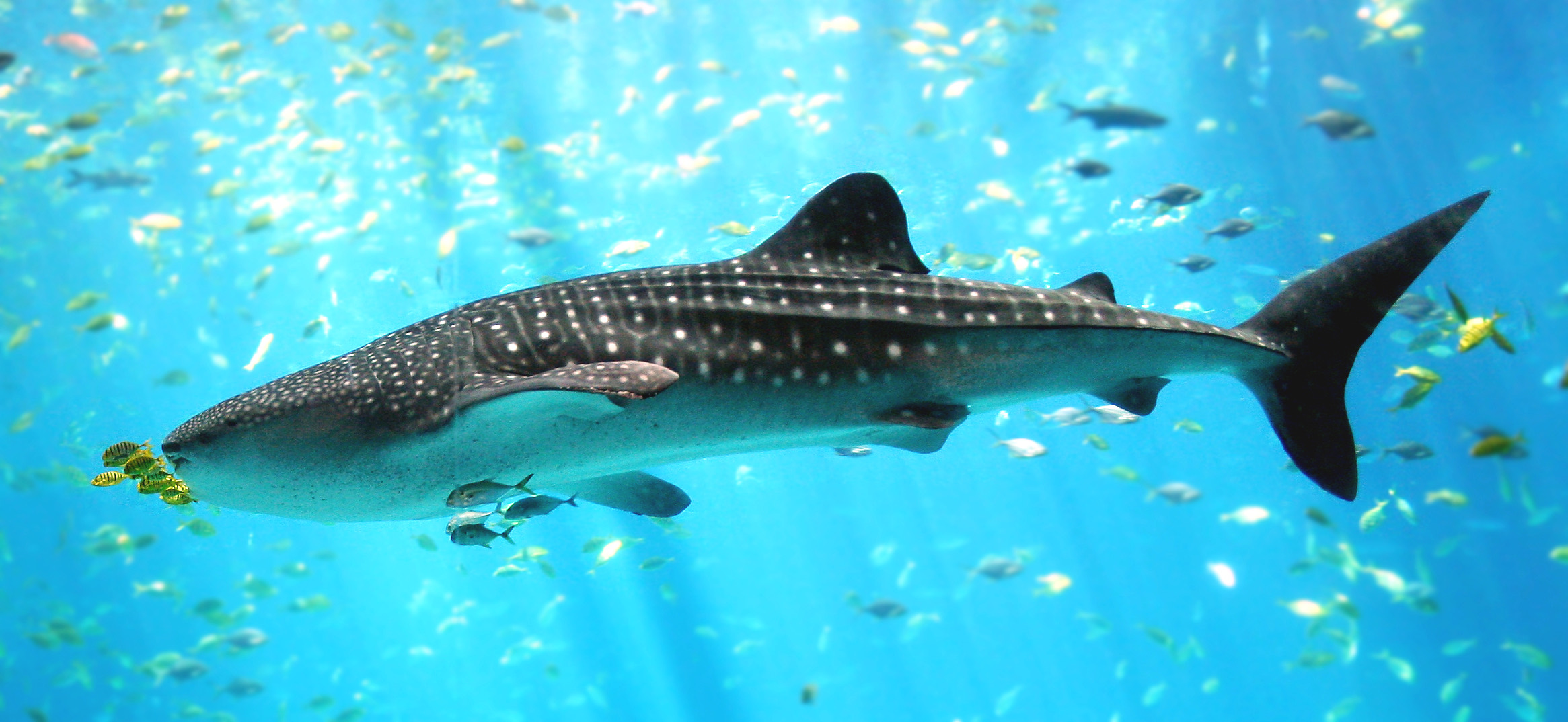
Whale Shark

Endangered

The largest fish on Earth. Now fully protected under CITES Appendix I. Indonesia's 10-year satellite study traced 70 individuals across 13 countries.

Thresher Sharks

Endangered–Vulnerable

All three thresher shark species granted CMS Appendix I protection in March 2026. Highly migratory and vulnerable to both targeted catch and bycatch.

Tope Shark

Critically Endangered

Southern Africa and Southwest Atlantic populations proposed for ESA 'Threatened' listing (April 2026). Also newly listed on CITES Appendix II.

Ecological Role

Why Sharks Matter

Their survival is not sentimental. It is structural. Without sharks, the marine ecosystems that produce the oxygen we breathe begin to unravel.

01

Keystone Predators

Sharks regulate prey populations from the top of the food web. Their removal triggers trophic cascades—when shark numbers drop, mid-level predators explode, herbivores collapse, and algae overruns coral reefs. This has been documented in reef ecosystems worldwide.

02

Slow to Recover

Most sharks mature late and reproduce slowly. A scalloped hammerhead may not reproduce until age 15. A female great white produces only 2–10 pups every 2–3 years. Populations simply cannot rebound fast enough to match current mortality rates.

03

Hunted for Commodity

Sharks are targeted for fins, meat, liver oil, and gill plates. A single basking shark liver can yield 400L of oil. Gulper shark liver oil is used in cosmetics and supplements. Wedgefish fins command the highest prices in Hong Kong markets—yet 4 of 5 CITES-listed species are still sold there.

04

Bycatch Crisis

Even when not targeted, sharks die in nets and longlines set for tuna, swordfish, and other species. An estimated 50 million sharks are caught as bycatch annually. New electric deterrents reduced shark bycatch by up to 70% in Florida trials.

05

Climate Cascade

Warming oceans are compressing shark habitats toward the poles and deeper waters. A 2024 typhoon failure in Okinawa raised sea temperatures to 34°C, causing catastrophic coral bleaching that displaced resident reef shark populations.

“Sharks survived five mass extinctions. They are not the danger. They are the ones in danger.”

— 2024 global assessment, published in Science Advances

Beyond the Myth

Sharks Aren't Monsters

The real story isn't about fear. It's about perspective.

65

Unprovoked shark bites globally in 2025

vs. 4,000+ US drowning deaths per year

~6

Average shark bite fatalities per year

2025 recorded 9 unprovoked fatalities (ISAF) — lightning still kills ~24,000/yr

450M

Years sharks have existed on Earth

They survived 5 mass extinctions — but may not survive us

"Sharks are mindless killing machines"

Shark bites are ecological overlaps — not targeted attacks. Most incidents involve the 'big three' (great white, tiger, bull sharks) due to their size and jaw strength, not aggression. The 10-, 20-, and 30-year bite averages differ by only four incidents, indicating consistent, non-escalating natural patterns.

"Shark populations are thriving"

Global shark populations remain far below historical levels. A 2024 study found one-third of sharks killed annually belong to species threatened with extinction. 70+ species needed emergency CITES protection in 2026.

"Bans have solved the problem"

Despite 49 countries with finning bans and CITES protections since 2014, DNA analysis of ~16,000 fin samples (KFBG, 2015–2021) reveals 70× more oceanic whitetip fins in markets than legal reports. 4 of 5 protected species are still sold openly in Hong Kong.

“Bites are ecological overlaps, not targeted hunting. Sharks are fragile — not ferocious.”

Species Profiles

Meet the Species

From the largest fish on Earth to the deepest-dwelling vertebrate.

Whale Shark

Whale Shark

Endangered
Size

Up to 40 ft (12 m)

Depth

Surface to 6,000 ft

The largest fish on Earth and a gentle filter feeder. Indonesia's decade-long study traced 70 individuals across 13 countries. Now fully protected under CITES Appendix I.

Six Facts Worth Knowing

Fact 01

Sharks have existed for 450 million years—older than trees and dinosaurs.

Fact 02

Sharks are found off every continent except Antarctica, from reefs to 7,200-foot trenches.

Fact 03

Hammerheads have 360-degree stereo vision thanks to their wide eye placement.

Fact 04

Some sharks can detect the electrical field of a beating heart from several feet away.

Fact 05

Shark skin is covered in dermal denticles—tiny tooth-like scales that reduce drag.

Fact 06

A great white can raise its body temperature above surrounding water—rare for fish.

Progress Report

Conservation Wins

The tide is turning. Governments, scientists, and advocates are making history—and every win is built on decades of effort.

March 2026International Treaty

CMS CoP15: Hammerheads & Threshers Protected

At the Convention on Migratory Species meeting in Campo Grande, Brazil, all three thresher shark species and both scalloped and great hammerheads were granted Appendix I protection—requiring strict national prohibitions on catch across their entire range.

WCS Newsroom, March 2026

Nov–Dec 2025Landmark Vote

CITES CoP20: 70+ Species Get Protection

Over 70 shark and ray species received stronger international trade protections at the CITES conference in Samarkand, Uzbekistan. Oceanic whitetips and whale sharks were uplisted to Appendix I for the first time.

Mongabay, IFAW, Nov–Dec 2025

Nov 2025Historic First

First Large Requiem Shark Uplisted to CITES Appendix I

The oceanic whitetip shark became the first large requiem shark uplisted to CITES Appendix I (CoP20, moved II→I), passed by 83% of voting parties. Sawfish—rays, not sharks—have been on Appendix I since 2013. This bans all international commercial trade and sets precedent for future listings.

CITES, SHARKPROJECT, Nov 2025

Nov 2025National Policy

Panama Ends All Shark & Ray Trade

Panama announced it will end all trade in shark and ray products, building on its 54% national marine protection. Panama was also selected to host the next CITES CoP, likely in 2028.

TIME, Nov 2025

Nov 2025In Progress

Hammerhead Coalition Launched

Ecuador, Costa Rica, Panama, Mexico, Kenya, and others formed the Hammerhead Coalition to push for hammerhead species to be uplisted to CITES Appendix I by the 2028 conference.

SHARKPROJECT, Nov 2025

2023–2025Technology

Electric Bycatch Deterrent Proven

A zinc-and-graphite device producing a small electric field reduced shark bycatch by up to 70% in Florida field trials without affecting target fish catch rates—cheap, effective, and scalable.

Mongabay, Feb 2026

Latest Developments

The Story Is Still Being Written

Verified reporting from the front lines of shark science, policy, and conservation — updated August 2026.

Policy WinNovember 2025

Oceanic Whitetip: First Large Requiem Shark Uplisted to CITES Appendix I

70+ species protected — every proposal passed

70+species gained protection at CoP20

At CITES CoP20 in Samarkand, Uzbekistan, governments voted to uplist the oceanic whitetip shark from Appendix II to Appendix I — the first large requiem shark to receive a full commercial trade ban (moved II→I). Sawfish, which are rays, have been on Appendix I since 2013. Every single shark and ray proposal tabled at CoP20 passed, with over 70 species gaining or strengthening protection.

Save Our Earth FoundationRead full article→
More Headlines
ConservationAugust 2026

Indigenous fishers rethink shark hunting & protect species on Colombia’s coast

LA GUAJIRA, Colombia — Feet from the ocean, four sharks and a ray lie dead on the wind-battered sand. Above them stands Wilfrido Arends, 46. The blade of a short knife glints in his hand. Carefully, he bends down to cut a small fin from the underside of one sh

MongabayRead→
PolicyAugust 2026

Global marine protected areas fail to safeguard most sharks and rays: Study

In 2022, 196 countries agreed to the ambitious conservation goal of “30×30”: setting aside 30% of the planet’s coastal and marine areas for conservation by 2030 as part of the Kunming-Montreal Global Biodiversity Framework. Now, halfway to 2030, only about 10%

MongabayRead→
Policy WinJuly 2026

EU Shark Fin Trade Declines as Brussels Mulls Total Ban

Total EU ban under consideration

The shark fin trade within the European Union has declined significantly as Brussels considers a total ban. The proposed EU-wide prohibition would close one of the last major legal fin markets in the Western world.

EuronewsRead→
ConservationJuly 2026

Seeking swordfish, catching dolphins and whales: EU pushes to rein in driftnets

Driftnets, vertically hanging nets that drift with ocean currents and can stretch for kilometers, are used to catch large pelagic species such as swordfish and tuna. However, they have long drawn criticism from conservationists as they also capture and kill sh

MongabayRead→
ScienceJune 2026

Asia’s shark and ray hotspots remain poorly protected, study finds

COLOMBO — The majority of 122 marine areas identified across Asia as critical for the survival of sharks, rays and chimaeras remain largely unprotected despite supporting some of the world’s most threatened marine species, according to a new study. Published i

MongabayRead→
New DiscoveryJune 2026

New Walking Shark Species Discovered in Papua New Guinea

New species — published June 2026

Researchers from the University of the Sunshine Coast identified a previously unknown walking shark species in Milne Bay, Papua New Guinea. Published in the Journal of the Ocean Science Foundation, the discovery reminds us that the ocean remains one of Earth’s least explored frontiers.

Mongabay / EarthSkyRead→
Policy WinJune 2026

French Polynesia Expands Ocean Protections to 30% of Its Waters

30% of waters now protected

French Polynesia has expanded its marine protected areas to cover 30% of its waters, meeting the global 30x30 conservation target ahead of schedule. The move protects critical shark and ray habitat across vast stretches of the South Pacific.

MongabayRead→
ScienceJune 2026

‘Thinking how traffickers think’: Study uses AI to detect marine wildlife smuggling

On Sunday, April 26, Argentine officials stopped an unusual shipment arriving at an airport near Buenos Aires. Inside, they found so many dead and dying fish, octopuses and crabs that a national rescue center had to install 10 new emergency tanks to support th

MongabayRead→
ConservationJune 2026

Four alleged wildlife traffickers arrested in Guinea, dried seahorses and shark fins seized

An undercover operation by Guinean authorities in the capital Conakry caught four men in possession of more than 2,000 dried seahorses and 26 kg (57 lbs) of shark and ray fins on May 22, 2026. According to a press release, the seizure was supported by the Guin

MongabayRead→
ConservationJune 2026

A year on, Australia’s biggest harmful algal bloom continues to wreak havoc

PORT HUGHES, Australia — Situated midway along the Great Southern Reef that spans Australia’s southern coastline, the waters off Port Hughes typically teem with life. The coastal hamlet northwest of Adelaide plays host to a multitude of coral, bivalve and fish

MongabayRead→
ConservationJune 2026

Whale strike risk rises as international shipping reroutes around South Africa

In April this year, two Bryde’s whales washed-up dead-on Dyer Island, a small nature reserve located a few kilometers off the coast of Gansbaai in South Africa’s Western Cape province. Both whales carried severe injuries; their vertebrae had been shattered. “I

MongabayRead→
ScienceJune 2026

Offshore wind power cables can affect sensory system of sharks and rays: studies

As offshore wind farms expand rapidly in the global renewable energy transition, scientists are studying how these large marine infrastructure projects affect ecosystems beneath the waves. Research from Wageningen University & Research in the Netherlands sugge

MongabayRead→
PolicyMay 2026

At world’s largest shark conference, scientists warn of a grim outlook across the board

COLOMBO — More than 800 researchers and conservationists gathered in Colombo, Sri Lanka’s capital, from May 4-8 for Sharks International, the world’s largest shark conference. Presenters shared research and insights on the global trade in sharks, the plight of

MongabayRead→
Policy WinMay 2026

New High Seas Treaty Aims to Protect Sharks and Rays Beyond National Borders

Protecting the two-thirds of ocean beyond borders

Sharks and rays don’t recognize national boundaries, and a new high seas treaty seeks to protect them in international waters. The agreement could close one of the biggest gaps in marine conservation — the two-thirds of the ocean beyond any single country’s jurisdiction.

MongabayRead→
PolicyMay 2026

Sharks and rays do not know boundaries and a new high seas treaty seeks to protect them

COLOMBO – As the Biodiversity Beyond National Jurisdiction (BBNJ) Agreement, commonly known as the High Seas Treaty, officially came into force in January, shark scientists and conservationists who gathered in Sri Lanka hailed the landmark treaty as one that c

MongabayRead→
Research WinMay 2026

10-Year Satellite Tracking of Whale Sharks Leads to New Protected Area in Indonesia

70 whale sharks tracked across 13 countries

Scientists from Conservation International tagged and tracked whale sharks across 13 countries over a decade, tracing 70 individuals. The data directly informed the creation of a new marine protected area in Indonesian waters — a key habitat for the world’s largest fish.

MongabayRead→
ScienceMay 2026

In Senegal, artisanal fishing kills a surprising number of sharks and rays: study

In Senegal, artisanal fishing kills a surprising number of sharks and rays, according to a new study — so many, it probably eclipses industrial fishing, which is more commonly blamed for the species’ decline. The study was published in the journal Ecology and

MongabayRead→
PolicyMay 2026

A 10-year whale shark satellite study helps create new protected area in Indonesia

“The whale sharks are a good omen for the fishers because they know when the whale sharks come, that means that lots of small fish or anchovies are around,” says Edy Setyawan, the lead conservation scientist of the Elasmobranch Institute Indonesia. It is the r

MongabayRead→
Policy WinApril 2026

Migratory Species Summit Adopts New Marine Protections Amid Extinction Warnings

3 shark groups gain Appendix I protection

At the CMS (Convention on Migratory Species) summit, governments adopted new Appendix I protections for scalloped hammerhead sharks, thresher sharks, and tope sharks. These listings require strict national protection for species whose populations have declined sharply.

MongabayRead→
ConservationApril 2026

Migratory species summit adopts new marine protections amid extinction warnings

Dozens of migratory animals, including 33 marine species, gained new protections during the recent summit for the Convention on the Conservation of Migratory Species of Wild Animals. The 15th Conference of the Parties (CMS COP15) took place March 23-29 in Camp

MongabayRead→
ConservationApril 2026

Latin America’s largest hospital complex cancels plan to buy shark meat

The University of São Paulo Medical School Hospital said it would cancel a plan to buy more than 17 metric tons of shark meat as part of a 2026 procurement, citing concerns over heavy metals. HCFMUSP is the largest public hospital complex in Latin America. It

MongabayRead→
ConservationMarch 2026

Investigation of permit violations in South Africa’s shark fishery pending

Following an October 2025 Mongabay report of the shark fishing vessel Zanette violating the conditions of its permit to catch endangered sharks, the South African Department of Forestry, Fisheries and the Environment (DFFE) announced that it would consider sus

MongabayRead→
ConservationMarch 2026

New strategy to reverse Kenya’s shark decline tries to bring fishers on board

NAIROBI — On Kenya’s eastern coast, a small-scale fisher lugs the day’s catch onto a table for processing and selling. Chances are, mostly threatened species like the scalloped hammerhead shark and the white-spotted guitarfish will appear on the table. This is

MongabayRead→
ConservationMarch 2026

Outlook for migratory species worsens amid habitat loss & avian flu, report finds

From shorebirds flying between their Arctic breeding grounds and southerly foraging ranges to freshwater fish returning to native spawning streams, migratory animals are struggling. About half of all migratory species populations protected under a global treat

MongabayRead→
PolicyMarch 2026

Bangladesh sees rise in ray, shark fishing as traditional seafood species dwindle

Though seafood is a prevalent protein source in Bangladesh, some fishes, like stingrays and sharks, never appealed to most of the population here, barring a few coastal Indigenous groups. However, the illegal fishing of such species has become common in the co

MongabayRead→
Research WinMarch 2026

Whale Shark ‘Mistral’ Swims 1,200 km from Madagascar to Seychelles — Cross-Border Protection Needed

1,200 km cross-border migration

The Madagascar Whale Shark Project tracked a whale shark named Mistral on a 1,200-kilometre journey from Madagascar to the Seychelles, published in Oryx (2026). The finding proves that conservation cannot stop at borders — these animals need protection across their entire range.

Save Our Seas FoundationRead→
ConservationMarch 2026

Proposed shark net near Club Med resort in South Africa sparks conservation clash

On Feb. 13, a juvenile humpback dolphin was caught and killed in one of the many nets strung up off the coast of South Africa’s KwaZulu-Natal province to protect beachgoers from sharks. The incident, near the city of Richards Bay on the country’s eastern coast

MongabayRead→
ConservationFebruary 2026

Mongabay shark meat exposé wins national journalism education award in Brazil

A Mongabay exposé that revealed widespread Brazilian government procurements of shark meat to serve in thousands of schools, hospitals, prisons and other public institutions has won first place in the higher education category of Brazil’s National Association

MongabayRead→
PolicyFebruary 2026

Panama NGOs face lawsuits, asset seizures in fight over port construction

For more than a year, dozens of environmental groups have been fighting the construction of a controversial port in Panama, arguing that it will harm marine life and the mangroves they depend on. Now, two of those groups have had their assets seized amid lawsu

MongabayRead→
ScienceFebruary 2026

It’s electric: Scientists develop cheap way to keep sharks off fishing hooks

Unintentional catch is a big reason that more than a hundred shark species are threatened with extinction. Yet creating a small electric field around fishing hooks using cheap inputs — zinc and graphite — is enough to keep many away, a new study indicates. In

MongabayRead→
ConservationFebruary 2026

Whale sharks released from nets along India’s coast as fishers turn rescuers

On a March morning in the suburbs of Thiruvananthapuram, Kerala state’s capital in southern India, a group of fishers were hauling their kambavala — a traditional net fixed between bamboo poles driven into the seabed. The net caught something immense. The fish

MongabayRead→
ConservationFebruary 2026

New global map shows where sharks and rays most need protection

Shark and ray populations are struggling across the world due to overfishing and other threats. A new report delineates 816 areas of the ocean that should be protected to help them recover. The report “Ocean Travellers” was published in December by the IUCN, t

MongabayRead→
PolicyJanuary 2026

Rio de Janeiro state bans shark meat for school meals

RIO DE JANEIRO — The government of the Brazilian state of Rio de Janeiro has banned shark meat for meals in most of the schools it manages, citing health and environmental concerns. The move puts the state in line to become the first in Brazil to do so, and ha

MongabayRead→
Enforcement GapJanuary 2026

DNA Analysis of ~16,000 Fins Reveals 70× More Oceanic Whitetip Fins Than Legal Reports

70× more whitetip fins than legal reports

A peer-reviewed study published in Science Advances (2025) analyzed roughly 16,000 shark fin samples from Hong Kong markets (KFBG, 2015–2021). Despite CITES protections, researchers found fins from four out of five regulated species remain common — with 70 times more oceanic whitetip fins and 10 times more hammerhead fins than legal reports indicate.

Mote Marine Laboratory / Science AdvancesRead→
PolicyDecember 2025

Mongabay shark meat investigation wins national journalism award in Brazil

A Mongabay investigation that revealed Brazilian state-run institutions bulk-buying shark meat for public schools, hospitals and prisons has won second place in the national category of the 67th ARI/Banrisul Journalism Award, one of the country’s most prestigi

MongabayRead→
ScienceDecember 2025

Bethany “Bee” Smith, researcher who documented a megamouth shark alive, died in a diving accident, aged 24

Founder’s Briefs: An occasional series where Mongabay founder Rhett Ayers Butler shares analysis, perspectives and story summaries. The risks of field science are usually described in abstract terms. Weather turns. Equipment fails. The sea does not always beha

MongabayRead→
ConservationDecember 2025

Zombie urchins & the Blob: California sea otters face new threats & ecosystem shifts

The sea otter pup was tiny, probably less than 2 weeks old, alone in Morro Bay on an October morning earlier this year. A kayaker scooped it out of the water after listening to it endlessly crying for its mother. It was in growing danger, starting to float out

MongabayRead→
ScienceDecember 2025

The lab-in-a-backpack busting illegal shark fins: Interview with Diego Cardeñosa

Diego Cardeñosa always knew he wanted to study sharks. But when he started his Ph.D., he had to make a choice: tagging sharks in the field — the “fun,” typically more-sought-after path — or studying their DNA in a lab. “I went for maybe not the most attractive

MongabayRead→
PolicyNovember 2025

45 more shark species up for CITES protections; tight vote expected

More than 180 nations gathering in Uzbekistan this week for the annual CITES conference could vote as early as Thursday on a proposal to regulate international trade in nearly 30 species of houndshark, a measure that would bring the vast majority of global sha

MongabayRead→
PolicyNovember 2025

For sharks on the brink of extinction, CITES Appendix II isn’t protective enough (commentary)

Sharks are some of the most threatened animals on Earth, with approximately one-third of all species assessed as threatened with extinction on the IUCN Red List. These animals are not only older than dinosaurs, but older than trees, and yet they face a very re

MongabayRead→

Conservation is not a spectator sport.

Every headline above started with someone choosing to act.

Common Questions

Frequently Asked Questions